

Your September priorities
September rewards the gardener who plants now. The soil holds summer's warmth, so roots establish fast before winter. Tackle these in order:
- Lift and divide overcrowded perennials (hostas, daylilies, hardy geraniums) once flowering's done — you get more plants and stronger growth next year.
- Take semi-ripe cuttings of lavender, hydrangea, salvia, fuchsia and pelargonium before the frosts arrive.
- Plant spring-flowering bulbs — daffodils, crocus, hyacinths and alliums go in now. Hold tulips until November.
- Deadhead repeat-flowering roses and remove any diseased foliage.
- Clear spent annuals to the compost heap and tidy beds.
Do the dividing and cuttings first — both depend on plants finishing their season, and the cuttings are time-sensitive before cold weather sets in.
Timing and weather
September is a transition month: warm soil but shortening days and the first hint of autumn. That combination makes it ideal for planting and dividing, because roots establish while the ground is still warm but top growth is slowing.
The advice here suits an average UK garden. Southern and coastal gardens may still feel summery and can hold off a little; northern and Scottish gardens cool sooner, so take frost-tender cuttings sooner rather than later and don't delay autumn planting. Keep an eye on your local forecast rather than the calendar — the first frost date varies by region and year.
September jobs
Lift and divide perennials. Hostas, daylilies and hardy geraniums benefit from splitting once they've finished flowering — dig up the clump, separate into sections each with roots and shoots, and replant.
Take semi-ripe cuttings. These are cuttings from this year's shoots, firm at the base but still soft at the tip. Lavender, hydrangea, salvia, fuchsia and pelargonium all root well from them if you take them before frosts arrive.
Deadhead and tidy roses. Remove spent blooms from repeat-flowering roses and clear any diseased foliage from around the plant.
Prune English lavender. Trim after flowering to keep plants compact — but never cut back into old wood.
Inspect structures. Check fences, sheds and the greenhouse for damage now, before winter weather makes it worse.
Clear spent annuals. Lift finished summer bedding and add it to the compost heap to make room for autumn planting.
What to plant and sow in September
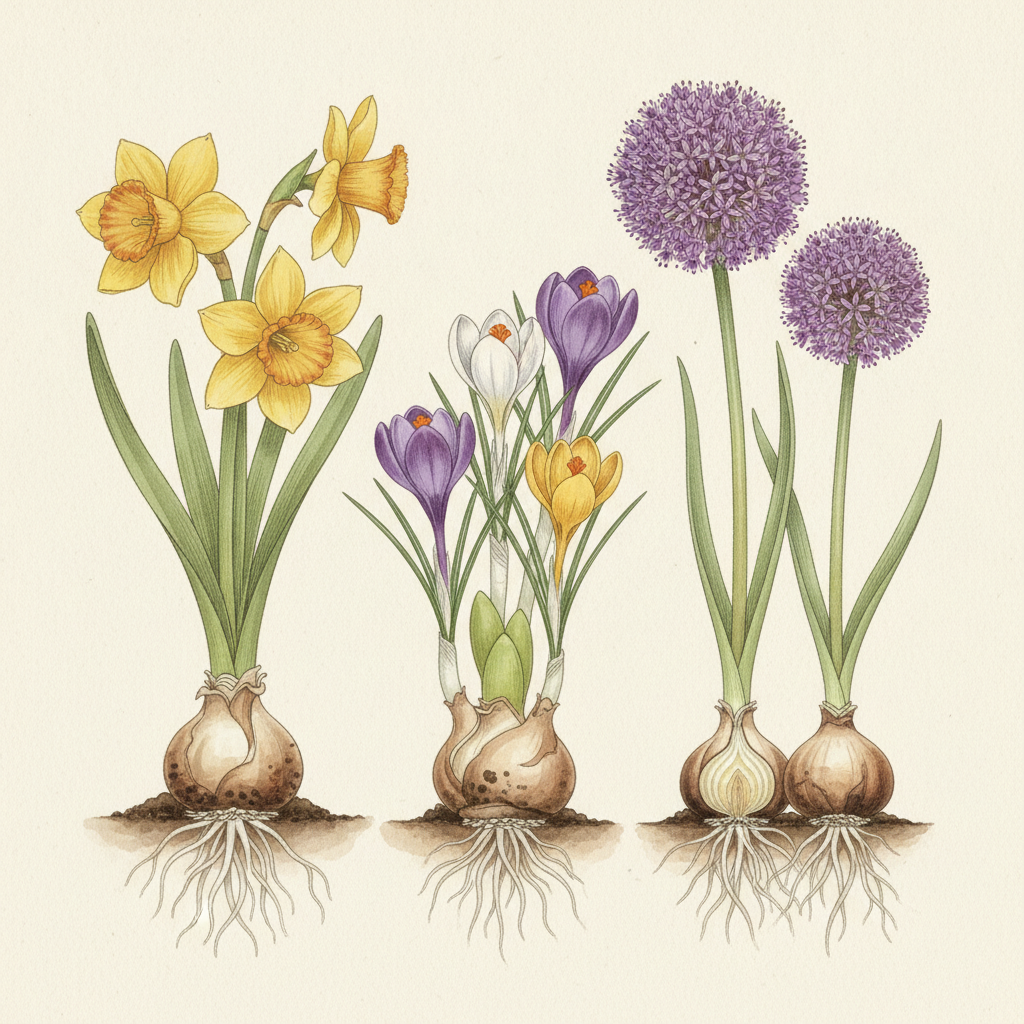
Spring-flowering bulbs — plant daffodils, crocus, hyacinth and alliums now while the soil is warm. Hold tulips until November to reduce the risk of tulip fire disease.
Green manure — sow on cleared vegetable beds to protect and enrich the soil over winter.
For planting depth and spacing on individual bulbs, see our plant pages rather than guessing — link through from the related plants below.
From the monthly read
Four to plant in September
Narcissus 'Thalia'Scent
Allium 'Purple Sensation'Statement
Aster 'Little Carlow'Bee favourite
NerineStatement
What to avoid in September
Don't plant tulips yet. Hold them until November — planting too early raises the risk of tulip fire disease.
Watch for powdery mildew. It appears in early autumn; water plants regularly as prevention. There's no fungicide available for edible crops, so prevention is your main defence.
Only compost annual weeds. Perennial weeds like dandelion and bindweed can regrow from root fragments — keep these out of the compost heap.
Let BeeWise build your September list
This page is the generic version. BeeWise turns it into your September list — tasks for the beds you actually have, not a national checklist.
If you logged hostas and daylilies in spring, BeeWise reminds you they're ready to divide now. It knows which lavender you pruned in August, so it won't tell you twice. It times your cuttings to your local frost forecast — sooner if you garden in the north, later on the mild coast — and it'll flag the tulip-planting wait so you don't jump the gun in September. Garden memory means each month builds on the last, instead of starting from a blank to-do list.
FAQ
Ready for a calmer month in the garden?
Get this turned into your own task list, timed to your garden and your local conditions.
For UK outdoor gardens · iPhone and Android